

I want to share something I did to the network here, that might be of use for network operators, that have multiple LoRa/TCP stationary nodes, operating under a common Backbone TCP Interface, like I have in Sofia.
I want to thank Nick for his great propagation simulator, that I used to present this to you, albeit the graphics are additionally edited.
To explain I have used a setup of one Backbone node, working as a discoverable gateway (aka the server on my desk), connected to the big outside world, and two transport enabled aethernodes, placed up and high, each having a boundary interface, facing the server. This way, because of the announce propagation rules, the flood of announces coming from all over the world will not bog down the slow (in my case 1.35kBps) LoRa network. Of course path resolution works just fine. Mobile nodes are actually in full mode,but this is not relevant to the main question.
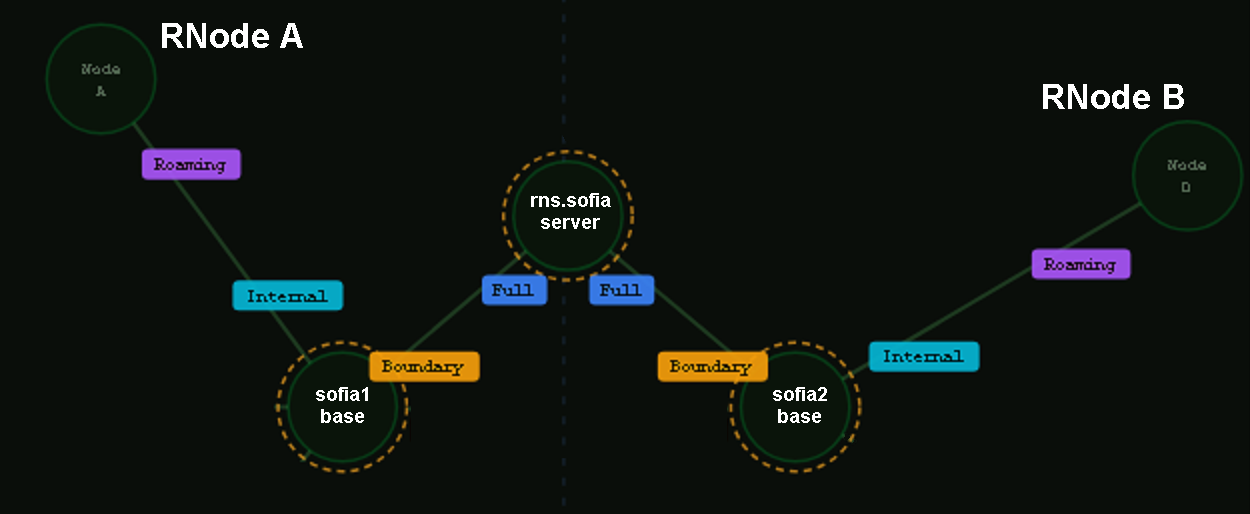
All is fine and dandy with this setup and I recommend it to anyone, who actually builds a community network. Except one thing...
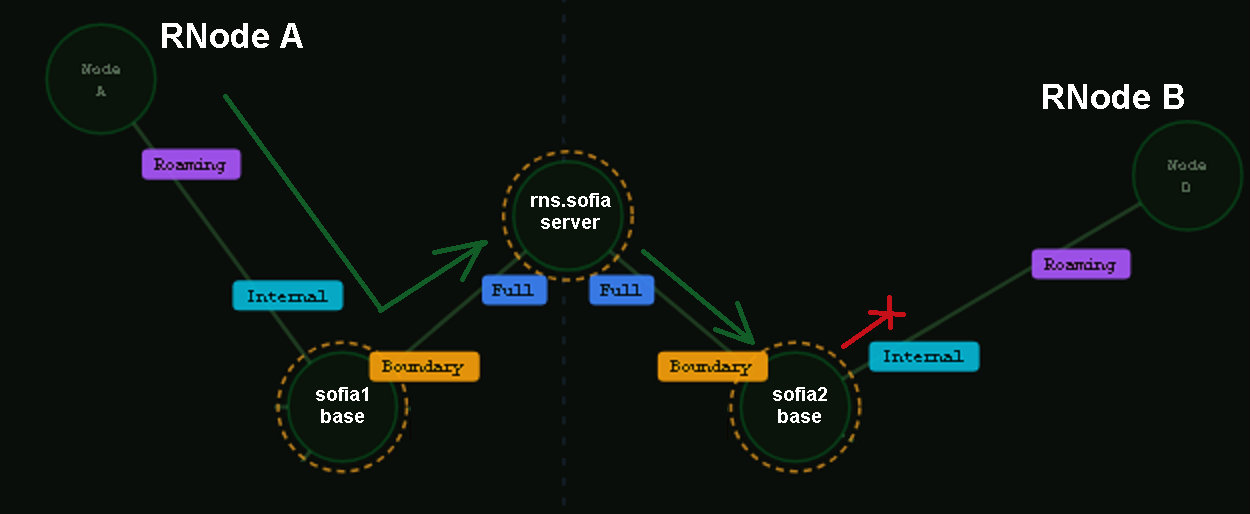
With fewer aethernodes placed far apart, that do not hear each other over the air, and have not meshed over radio, the only path for announce propagation is trough the server. But because aethernodes are set up with Boundary mode facing the server, any announce, that comes form another one of the stationary nodes, will not get retransmitted by the one, that receives it, leaving the network kinda segmented. I really want people from far parts of the city to be able to hear eachother's announces, because for me this kinda socially stitches the network together, especially with lower number of those stationary aethernodes in it. I also want to lower the airtime as much as possible, especially in the beginning.
After consulting Mark and Nick, i decided to try something new, and create an additional bridge, between each aethernode in the network, that would pass announces freely, and I chose the Internal Interface mode. Here we go, drawing begins...
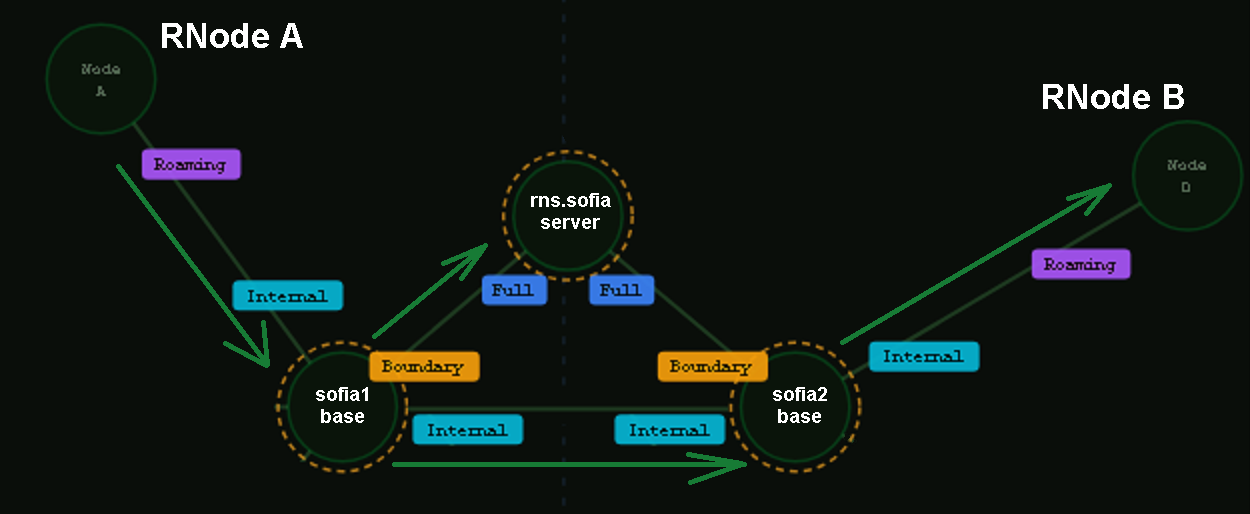
I set new routing rules in the routers and opened the aethernodes for port 4243, the next in line for the throne. Than I set up the Internal Backbone interfaces on each aethernode. I will give just Sofia 1 and Sofia 2 as examples for simplicity, but adding more is pretty straightforward. The first one is a listener, that listens on the local IP of the node. Mine are 192.168.0.5 (sofia1), 192.168.0.6 (sofia2), 192.168.0.7 (sofia3) and so on for different aethernodes. And the second one is the interface, that points to the neighbouring aethernode's listener.

I restarted RNS on both nodes and voila! They have successfully connected Internal-ly. :)
Sofia4 is being set up now, and I don't have an IP yet, but better be ready in advance. And now, when I have added all existing aethernodes to say, sofia2 config, the Internal group looks like this:
[[Backbone sofia2]]
type = BackboneInterface
enabled = Yes
mode = internal
listen_on = 192.168.0.6
port = 4243
[[sofia1 Backbone]]
type = BackboneInterface
enabled = yes
mode = internal
target_host = 193.193.182.147 (same as the server, behind same router)
target_port = 4243
[[sofia3 Backbone]]
type = BackboneInterface
enabled = yes
mode = internal
target_host = Sofia3 IP
target_port = 4243
[[sofia4 Backbone]]
type = BackboneInterface
enabled = no
mode = internal
target_host =
target_port = 4243
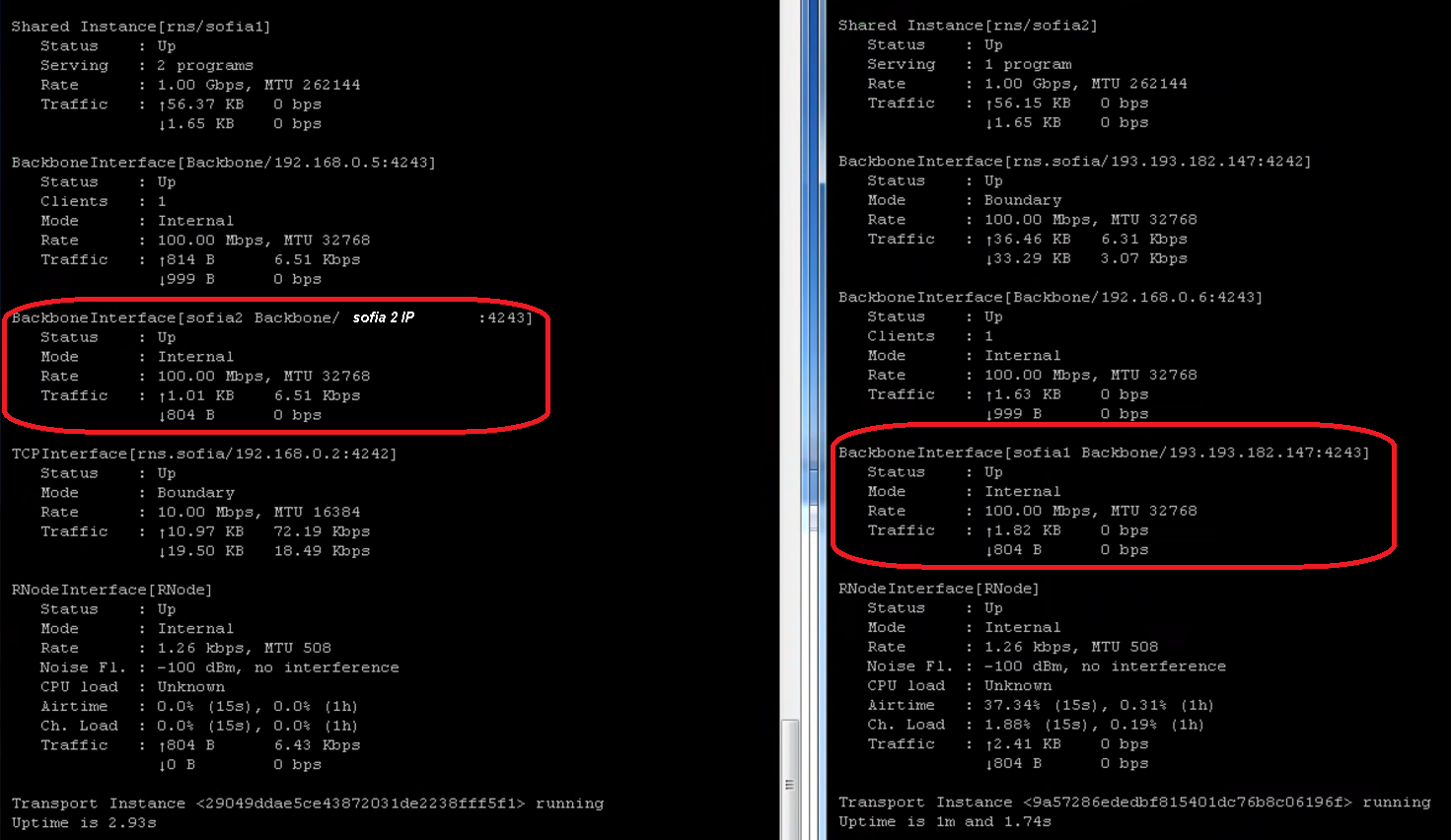
And you can see the result of an rnstatus:
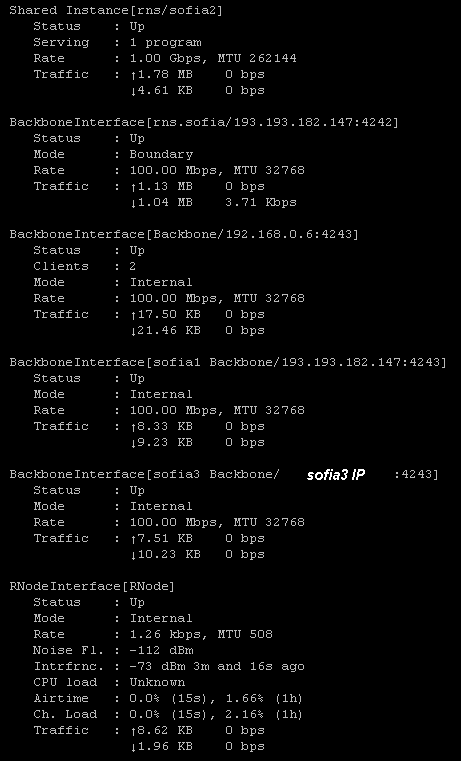
And now any announce, received on any aethernode LoRa interface will be propagated over the city by the other aethernodes. :)
Cheers!
Bill