I think you can safely replace this with curl and jq, the closure is smaller:
curl -fsS http://192.168.2.105/signalk/v1/api/vessels/self/navigation/position |
jq -r '(.value // .) | "\(.latitude), \(.longitude), \(.altitude // 0)"'
Started by bergie f9477df559d52317... ·
I think you can safely replace this with curl and jq, the closure is smaller:
curl -fsS http://192.168.2.105/signalk/v1/api/vessels/self/navigation/position |
jq -r '(.value // .) | "\(.latitude), \(.longitude), \(.altitude // 0)"'
p1ld7a wrote:
I think you can safely replace this with
curlandjq, the closure is smaller:
Fair point, though if you run rnsd you likely have a working Python installation, while you might not have jq installed.
Fair point too !
| Just coming into this cold, but that didn't ring true to me. RadioLibInterface.cpp and RadioInterface.cpp cover this via RadioLib's scanChannel(). So...
RadioLib's scanChannel() is a far cry from proper CSMA. It doesn't even detect same-channel LoRa traffic with different modulation parameters, much less non-LoRa interference from other modulation types and RF sources, as would be required for proper CSMA. It also doesn't have proper slotting and airtime-based backoff (unless something changed since last time I read the source).
RNode has full and proper CSMA, with an algorithm similar to what WiFi uses, but designed specifically for the particular characteristics of LoRa.
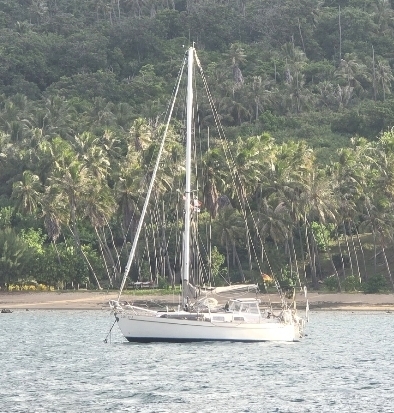
| Just wanted to note that this seems to work fine. Our boat RNode is now visible on the map on this site (as well as in Columba).
Very good to hear! That is so awesome to see! This takes the price as first boat-node discoverable, I think :) Thanks for sharing the script! It's really nice you're integrating this into Signal K, that'll be a useful building block for others as well.
I just had to disable discoverable from our RNode, as that forces it into ap mode. With that, devices on our LAN (like Signal K) can't talk to RNodes we have out there. Instead, set the RNode in roaming mode and the TCP connections to the internet in boundary mode and that seems to work.
But would still be cool to have the RNode discoverable...